
Baby Observational Selective Control AppRaisal (BabyOSCAR)
About Baby Observational Selective Control AppRaisal (BabyOSCAR) - Brisbane, 2027
Baby Observational Selective Control AppRaisal (BabyOSCAR)
Sunday 28 Feb – Tuesday 2 March, 2027
South Brisbane
SOLD OUT
Join the waitlist to be notified when a place becomes available.
Join us in Brisbane for the first BabyOSCAR course offered to clinicians Australia-wide.
Delivered face-to-face by expert presenters from the USA, this event offers a rare chance to learn directly from the developers of BabyOSCAR and other world-leading experts.
Places are limited, and this may be the only opportunity for Australian clinicians to access this training locally for the foreseeable future.
Register your interest now and don't miss this unique opportunity to learn directly from world-leading experts and developers of the BabyOSCAR
What is BabyOSCAR?
BabyOSCAR (Observational Selective Control AppRaisal) is a standardized observational tool for evaluating selective motor control in infants ≤5 months of age. Using a brief video of spontaneous movement, BabyOSCAR characterizes emerging capacity for independent joint control across the body. These early movements are highly predictive of later motor function (GMFCS) and distribution (unilateral vs bilateral) of cerebral palsy informing early prognosis and targeted intervention strategies.
Developed at Northwestern University within the Department of Physical Therapy & Human Movement Sciences, BabyOSCAR is supported by a growing body of research examining early selective motor control in infancy.
What it measures
BabyOSCAR captures observed independent joint movements across the body to characterize emerging capacity for selective motor control during early infancy.
Why it matters
Early motor behavior provides important information about neurodevelopment. BabyOSCAR is designed to support earlier and more precise clinical understanding of independent joint control and may contribute to improved early cerebral palsy prognosis and clinical decision-making.
Research foundation
BabyOSCAR is validated, reliable, and is based on neurophysiology of the developing brain. BabyOSCAR complements existing early detection approaches, is non-invasive, and does not require additional hands-on assessment of the infant.
Find out more about BabyOSCAR from the offical website: https://www.babyoscar.org/
Course format
- Lectures on the conceptual basis of BabyOSCAR
- Video-based scoring practice
- Discussion of interpretation and application
- Opportunities for questions and case-based learning
Who should attend?
- Physical therapists (PTs)
- Occupational therapists (OTs)
- Speech-language pathologists (SLPs)
- Neonatologists
- Neurologists
- Physiatrists
- Pediatricians
- Developmental pediatricians
- Researchers studying infant motor development
Pricing
Catering will be provided. Limited places available.
| Standard | $1650 AUD |
Course Presenters
BabyOSCAR training is taught by faculty at Northwestern University who developed and validated the assessment.
Associate Professor Theresa Sukal-Moulton
Northwestern University
DPT, PhD
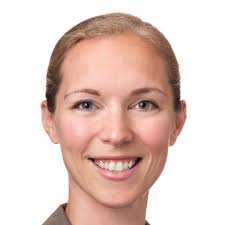
Associate Professor Colleen Peyton
Northwestern University
DPT, MSCI

Publications and supporting evidence
Moulton et al. (2024). Baby Observational Selective Control AppRaisal (BabyOSCAR): Convergent and discriminant validity and reliability in infants with and without spastic cerebral palsy. Developmental Medicine & Child Neurology.
Peyton et al. (2024). Baby Observational Selective Control AppRaisal (BabyOSCAR): Scores at 3 months predict functional ability, spastic cerebral palsy distribution, and diagnosis at 2 years. Developmental Medicine & Child Neurology.
Barbosa et al. (2024). Baby observational selective control appraisal (BabyOSCAR): construct validity and test performance. Developmental Medicine & Child Neurology.
Peyton et al. (2025). Emergence of Selective Motor Control in Early Infancy: A Longitudinal Study of Infants Born Preterm With and Without Cerebral Palsy. The Journal of Pediatrics.
Drobyshevsky et al. (2026). Multimodal MRI of white matter development and selective motor control in preterm infants. NeuroImage: Clinical.
Joshi et al. (2026). Markerless Motion Capture for Biomechanical Whole-Body Kinematic Estimation in Infants. IEEE Engineering in Medicine and Biology Conference.