
Update on evidence-based Early Detection & Early Intervention for Infants at risk of Cerebral Palsy and Neurodevelopmental disability
About Update on evidence-based Early Detection & Early Intervention for Infants at risk of Cerebral Palsy and Neurodevelopmental disability - California & Delaware
Update on evidence-based Early Detection & Early Intervention for Infants at risk of Cerebral Palsy and Neurodevelopmental disability
Sonoma County, CA - 21st September 2026 | Dupont, DE - 24th September 2026
Professor Roslyn Boyd
| Dr Carly Luke
|
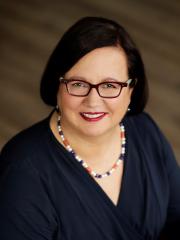

This workshop will be delivered by Professor Roslyn Boyd and Dr Carly Luke, both internationally recognised leaders in early detection and neurodevelopmental research.
About the workshop
Early Detection with Dr Carly Luke
Dr Carly Luke will provide an update on the latest evidence in early detection, including the use of the General Movements Assessment (GMA), Motor Optimality Score–Revised (MOS-R), Baby OSCAR and the Hammersmith Infant Neurological Examination (HINE). Participants will explore how these assessment tools can be integrated into clinical practice to support early risk stratification, prognosis and intervention planning for infants at risk of neurodevelopmental difficulties.
This course emphasises the use of the HINE, GMA and MOS-R not only for early identification of CP, but also for early prediction of functional outcomes and CP distribution, supporting earlier prognostic discussions with families and targeted intervention planning. Through clinical examples and emerging evidence, participants will learn how combined assessment findings can be used to interpret infant developmental trajectories and identify broader non-CP neurodevelopmental disabilities and delays.
Early Intervention with Prof Roslyn Boyd
Professor Roslyn Boyd will present the latest evidence from three cerebral palsy specific early intervention programs: REACH for infants with unilateral CP, LEAP for infants with CP living in resource-diverse settings, and VISIBLE for infants with cerebral palsy and cerebral vision impairment. These recent randomised clinical trials have demonstrated evidence to improve outcomes (manual ability, motor, vision and parent mental health) and can begin from as early as 0-6 months of age, harnessing critical periods of neuroplasticity to optimise developmental outcomes.
Drawing on findings from these trials, participants will learn the key principles of effective early intervention, including goal-directed and task-specific practice, active infant engagement, family-centred care, parent coaching, and the integration of intervention into everyday routines. Prof Boyd will discuss how intervention can be individualised to an infant's specific presentation and developmental profile, and how clinicians can use information from early detection assessments to guide treatment planning and clinical decision-making.
This session will provide practical insights into translating early diagnosis and risk identification into meaningful action, equipping clinicians with contemporary evidence-based strategies to support infants at high risk of cerebral palsy and their families during the earliest and most influential stages of development.
A key theme is moving beyond diagnosis alone, using early assessment tools to inform functional trajectories, clinical decision-making, and meaningful early intervention.
Workshop Details
Sonoma County, CaliforniaIn-personWhen: Monday 21st September, 9:00am to 4:00pm PDT Where: Sonoma County Department of Health Services Administration, Santa Rosa Room, 1450 Neotomas Rd, Santa Rosa, CA 95403
VirtualWhen: Monday 21st September, 9:00am to 1:00pm Where: Virtual via zoom
Registration has closed. | Dupont, DelawareBoth In-person & VirtualWhen: Thursday 24th September, 9:00am to 4:00pm EDT Where: Nemours Children's Hospital, 1600 Rockland Rd., Wilmington, DE19803 or Virtual via Zoom
Registration has closed.
|
|---|
Workshop Objectives
By the end of this course, participants will be able to:
- Understand the role of evidence-based early detection tools, including the Hammersmith Infant Neurological Examination (HINE), General Movements Assessment (GMA), Motor Optimality Score-Revised (MOS-R), and BabyOSCAR, in the early identification of infants at high risk of cerebral palsy and other neurodevelopmental disabilities, and in informing developmental trajectories, including CP-specific prognostic indicators, and future functional outcomes.
- Understand the key principles of effective early intervention for infants at high risk of cerebral palsy, including family-centred care, goal-directed intervention, active infant participation, and interventions that leverage early neuroplasticity.
- Understand the evidence and emerging principles arising from the REACH, LEAP, and VISIBLE early intervention studies, including how information from early detection assessments can be used to guide targeted early intervention and support improved outcomes for infants and their families.
Schedule - Sonoma County, CA | 21st September 2026
| 9:00am - 11:00am | Update on latest evidence for early detection with Dr Carly Luke & Professor Roslyn Boyd (both in-person & virtual participants) |
| 11:00am - 11:30am | Morning Tea Break (provided) |
| 11:30am - 1:00pm | Case-based learning - Precision early detection to tailored early intervention with Dr Carly Luke and Professor Roslyn Boyd (both in-person & virtual participants) |
| 1:00pm - 2:00pm | Lunch Break (provided) |
| 2:00pm - 4:00pm | Update on latest evidence and practical application of early intervention approaches with Professor Roslyn Boyd (in-person participants only) |
Schedule - Dupont, DE | 24th September 2026
| 9:00am - 10:30am | Update on latest evidence for early detection with Dr Carly Luke & Professor Roslyn Boyd |
| 10:30am - 11:00am | Morning Tea Break (provided) |
| 11:00am - 12:30pm | Practical application of early detection towards tailored evidence-based intervention (Cases) with Dr Carly Luke & Professor Roslyn Boyd |
| 12:30pm - 1:30pm | Lunch Break (provided) |
| 1:30pm - 4:00pm | Update on latest evidence on early intervention. |
Who should attend?
Any individual interested in or currently involved in clinical practice and research for early identification and provision of early intervention for infants at high risk of cerebral palsy (including Physiotherapists, Paediatricians, Child Neurologists, Occupational Therapists). This training is suitable for any level and there are no pre-requisites.
Pricing
Catering will be provided. Registration limited to 30 participants per in-person course.
Continuing Education Units (CEU) will be applied for state therapists, but not guaranteed.
| Sonoma County, California | 21st September, 2026 | |
|---|---|
| Clinicians & Allied Health Professionals (in-person, full-day) | approx. $200USD ($290AUD) |
| Medical Physicians (in-person, full-day) | approx. $250USD ($360AUD) |
Virtual - Early Detection & Case-Based Learning Only (9:00am - 1:00pm) Recording will be made available to watch afterwards for Early Detection segment only.) | approx. $100USD ($140AUD) |
| Dupont, Delaware | 24th September, 2026 | |
|---|---|
| Clinicians & Allied Health Professionals (in-person) | approx. $200USD ($290AUD) |
| Medical Physicians (in-person) | approx. $250USD ($360AUD) |
| Virtual (new!) | approx. $200USD ($290AUD) |
*All prices are charged in AUD. USD prices are provided as an estimate only, based on current exchange rates at the time of quoting.
Registration will close 14th of September.
Contact
Please direct any enquiries to qcprrc@uq.edu.au.
Recent Publications
Early surveillance
- Burgess, A., Luke, C., Jackman, M., Wotherspoon, J., Whittingham, K., Benfer, K., Goodman, S., Caesar, R., Nesakumar, T., Bora, S., Honeyman, D., Copplin, D., Reedman, S., Cairney, J., Reid, N., Sakzewski, L., & Boyd, R. N. (2025). Clinical utility and psychometric properties of tools for early detection of developmental concerns and disability in young children: A scoping review. Dev Med Child Neurol, 67(3), 286-306. https://doi.org/10.1111/dmcn.16076.
- Benfer, K. A., Ghosh, A. K., Chowdhury, S., Moula, G., Samanta, S., Maiti, P., Bhattacharya, A., Khan, N. Z., Whittingham, K., Ware, R. S., Morgan, C., Bandaranayake, S., Novak, I., & Boyd, R. N. (2025). Early detection of infants with neurodevelopmental concerns indicative of cerebral palsy in a lower middle-income country (India). Dev Med Child Neurol, 67(12), 1554-1563. https://doi.org/10.1111/dmcn.16351
- Luke, C., Benfer, K. A., Mick-Ramsamy, L., Ware, R. S., Bosanquet, M., Reid, N., Bos, A. F., & Boyd, R. N. (2025). Predicting neurodevelopmental outcomes in Australian First Nations infants: The transdiagnostic utility of early screening tools. Dev Med Child Neurol. https://doi.org/10.1111/dmcn.70003
- Kwong, A. K., Eeles, A. L., Anderson, P. J., Arunanthy, S., Badawi, N., Boyd, R. N. P., Cameron, K. L., Colditz, P. B., Crowle, C., Dale, R., Doyle, L. W., George, J. M., Koorts, P. J., Lee, K. J., Luke, C. R., McNamara, L., Morgan, C., Novak, I., Olsen, J. E., Reid, N. G., Scuffham, P., Whittingham, K., Cheong, J. L., & Spittle, A. J. (2025). Early high risk of cerebral palsy classification is predictive of cerebral palsy at 2 years: an implementation cohort study. Arch Dis Child, 111(1), 76-83. https://doi.org/10.1136/archdischild-2025-329242.
- Moula, M., Benfer, K., Boyd, R., & Sakzewski, L. (2024). Implementation of Learning through Everyday Activities with Parents of Infants with CP (LEAP CP) early detection and intervention program in India Developmental Medicine And Child Neurology, Cairns, QLD Australia. http://espace.library.uq.edu.au/view/UQ:2956cd0
- Luke C, Mick-Ramsamy L, Bos AF, Benfer KA, Bosanquet M, Gordon A, et al. Relationship between early infant motor repertoire and neurodevelopment on the hammersmith infant neurological examination in a developmentally vulnerable First Nations cohort. Early Human Development 2024;192:106004. https://doi.org/10.1016/j.earlhumdev.2024.106004
- Jackman M, Morgan C, Luke C, Korostenski L, Zawada K, Juarez M, et al. The predictive validity of HINE, Bayley, general movements and MOS-R in infancy. Early Human Development 2025;203:106226. https://doi.org/10.1016/j.earlhumdev.2025.106226
MOS-R
- Einspieler C, Bos AF, Krieber-Tomantschger M, Alvarado E, Barbosa VM, Bertoncelli N, et al. Cerebral Palsy: Early Markers of Clinical Phenotype and Functional Outcome. J Clin Med 2019;8(10). https://doi.org/10.3390/jcm8101616
- Luke, C., Bos, A. F., Jackman, M., Ware, R. S., Gordon, A., Finn, C., Baptist, D. H., Benfer, K. A., Bosanquet, M., & Boyd, R. N. (2025). Reproducibility of the Motor Optimality Score-Revised in infants with an increased risk of adverse neurodevelopmental outcomes. Dev Med Child Neurol. https://doi.org/10.1111/dmcn.16256
- Kwong AKL, Doyle LW, Olsen JE, Eeles AL, Lee KJ, Cheong JLY, et al. Early motor repertoire and neurodevelopment at 2 years in infants born extremely preterm or extremely-low-birthweight. Developmental Medicine & Child Neurology 2022;64(7):855-62. https://doi.org/10.1111/dmcn.15167
BabyOSCAR
- Peyton C, Aaby D, Barbosa VM, Boswell L, de Regnier RA, Bos AF, et al. Baby Observational Selective Control AppRaisal (BabyOSCAR): Scores at 3 months predict functional ability, spastic cerebral palsy distribution, and diagnosis at 2 years. Dev Med Child Neurol 2024. https://doi.org/10.1111/dmcn.15925
- Sukal-Moulton T, Barbosa VM, Sargent B, Boswell L, de Regnier RA, Bos AF, et al. Baby Observational Selective Control AppRaisal (BabyOSCAR): Convergent and discriminant validity and reliability in infants with and without spastic cerebral palsy. Dev Med Child Neurol 2024. https://doi.org/10.1111/dmcn.15924
- Barbosa VM, Peyton C, Sukal-Moulton T. Baby Observational Selective Control AppRaisal (BabyOSCAR): Construct validity and test performance. Dev Med Child Neurol 2024. https://doi.org/10.1111/dmcn.15926
Early MRI and EEG for detecting CP
- Bonezzi, L., Rocchitelli, L., Biagioni, T., Chorna, O., Pannek, K., Luke, C., Ware, R. S., Fripp, J., Guzzetta, A., Fiori, S., & Boyd, R. N. (2026). Comparative Diagnostic Performance of Early and Term MRI in Preterm Infants: a Diagnostic Test Accuracy Systematic review and Bayesian Meta-analysis. Neonatology, 1–19. Advance online publication. https://doi.org/10.1159/000552875.
- Bonezzi, L., Biagioni, T., Fiori, S., Luke, C., George, J. M., Colditz, P. B., Fripp, J., Ware, R. S., Pannek, K., & Boyd, R. N. (2026). Concordance and Association of Kidokoro MRI Scores at 32 and 40 weeks post-menstrual age with Neurodevelopmental Outcomes in Very Preterm Infants. AJNR. American journal of neuroradiology, ajnr.A9350. Advance online publication. https://doi.org/10.3174/ajnr.A9350.
Early Intervention
- Boyd, R. N., Greaves, S., Ziviani, J., Novak, I., Badawi, N., Pannek, K., Elliott, C., Wallen, M., Morgan, C., Valentine, J., Findlay, L., Guzzetta, A., Whittingham, K., Ware, R. S., Fiori, S., Maitre, N. L., Heathcock, J., Scott, K., Eliasson, A. C., & Sakzewski, L. (2025). Randomized Comparison Trial of Rehabilitation Very Early for Infants with Congenital Hemiplegia. J Pediatr, 277, 114381. https://doi.org/10.1016/j.jpeds.2024.114381.
- Guzzetta, A., Bancale, A., Bedoshvili, A., Bosanquet, M., Chorna, O., Corsi, G., Del Secco, S., Elliott, C., Fiori, S., Fripp, J., Gole, G. A., Gordon, A., Harpster, K., Hunt, R. W., Leishman, S., Mori, R., Morgan, C., Novak, I., Pagnozzi, A. M., Pannek, K., … Boyd, R. N. (2026). Vision Intervention for Seeing Impaired Babies: Learning through Enrichment (VISIBLE) - protocol of a feasibility pilot randomised controlled trial. BMJ open, 16(4), e114567. https://doi.org/10.1136/bmjopen-2025-114567
- Benfer KA, Whittingham K, Ware RS, Ghosh AK, Chowdhury S, Moula G, Boyd RB et al. Efficacy of early intervention for infants with cerebral palsy in an LMIC: An RCT. Pediatrics. 2024;153(4):1-15. https://doi.org/10.1542/peds.2023-063854.
- Benfer, Katherine, Boyd, Roslyn N, Roe, Yvette, Fagan, Ruth, Luke, Carly, Mick-Ramsamy, Leeann, Whittingham, Koa, Novak, Iona, Bosanquet, Margot, McNamara, Lynda, Khandaker, Gulam, Fogarty, Lucy, Cadet-James, Yvonne, Ruben, Alan, Comans, Tracy, Smith, Anthony and Ware, Robert S (2023). Study protocol: peer delivered early intervention (Learning through Everyday Activities with Parents for Infants at risk of Cerebral Palsy: LEAP-CP) for First Nation Australian infants at high risk of cerebral palsy - an RCT study. BMJ Open, 13 (3) e059531, 1-16. doi: 10.1136/bmjopen-2021-059531.