
United Arab Emirates - Workshops & Courses
About United Arab Emirates - Workshops & Courses
United Arab Emirates - Workshops & Courses
Saturday 1st May - Friday 7th May, 2027
Presenters
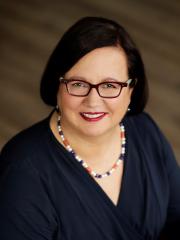
Professor Roslyn Boyd The University of Queensland Courses:
|
Dr Carly Luke The University of Queensland Courses:
|
Professor Andrea Guzzetta Senior Tutor in the General Movements Trust The University of Pisa Courses:
|

About the courses
General Movements
The Basic Course
The Basic Course provides an introduction to Prechtl's Method on the Qualitative Assessment of General Movements in young infants. This new assessment method has shown its merit for the prenatal and postnatal evaluation of the integrity of the nervous system. Compelling evidence is now available that qualitative assessment of General Movements (GMs) at a very early age is the best predictor for cerebral palsy. This method has become a potent supplement to the traditional kind of neurological examination.
The courses fulfill the standards specified by the GM-Trust www.general-movements-trust.info,
Who should attend?
Medical specialists, neonatologists, physiotherapists, occupational therapists, registered nurses and other professionals in the field of infant neurology.
Availability is limited. Only 25 places available.
The Advanced Course
The Advanced Course B will provide additional intensive training in correct judgement. This training will deal with the details of the assessment, the proper terminology and techniques, as well as with the application of individual developmental trajectories.
The courses fulfill the standards specified by the GM-Trust www.general-movements-trust.info.
Who should attend?
Medical specialists, neonatologists, physiotherapists, occupational therapists, registered nurses and other professionals in the field of infant neurology. Participation in the Advanced Course is possible only for individuals who successfully passed a Basic Training Course held under the auspices of the GM-Trust.
Availability is limited. Only 25 places available.
Introduction to the Hammersmith Infant Neurological Examination
The Hammersmith Infant Neurological Examination (HINE) is a simple, standardised, and scoreable clinical neurological examination that can be used to assess infants from 2-24 months of age to identify infants with a high probability of cerebral palsy and other neurodevelopmental delays.
- Six-hour workshop that will provide standardised training in the HINE,
- All items in HINE will be presented with the correct approach of administration and scoring,
- Infants aged between 4-24 months will be used to train the participants in small groups and accurate scoring and administration of the HINE,
- Morning tea and lunch included,
- Updated resource booklet and key readings included.
Background
The HINE contains 26 items across 5 domains which are combined to gain a global score. The International Clinical Practice Guideline for the Early Accurate Diagnosis of cerebral palsy recommends the use of the HINE as a key tool for the early identification of cerebral palsy, especially when results are triangulated with the general movements assessment and MRI. The HINE has strong prognostic value for predicting cerebral palsy functional severity and distribution. Emerging evidence supports its use as a transdiagnostic tool for other, non-cerebral palsy neurodevelopmental disability, including cognitive and motor delays in babies with newborn-detectable risk factors (preterm and term).
Training objectives
- Outline the current evidence for use of the Hammersmith Infant Neurological Examination (HINE) for the early detection of infants at high risk of cerebral palsy and other neurodevelopmental delays.
- Demonstrate the HINE with video and hands-on case examples and train clinicians and researchers how to administer the assessment in infants with neurodevelopmental risk factors.
- Provide an opportunity for participants to score cases of infants on the HINE to determine their risk status.
- Understand the role of HINE in prioritising intervention goals.
Who should attend?
Any individual interested in or currently involved in clinical practice and research for early identification and provision of early intervention for infants at high risk of cerebral palsy. This training is suitable for any level and there are no pre-requisites.
Update on Assessment and intervention for infants with Cerebral Visual Impairment (CVI) and Cerebral Palsy
Up to 70% of infants and children with Cerebral Palsy also have co-occurring Cerebral Visual Impairment (CVI). This goes unrecognised until children are much older well after the period of maximum neuroplasticity. Prof Guzzetta and his team have developed valid and reliable methods for screening and assessing young infants for risk of CVI. Together Prof Guzzetta and Prof Boyd have conducted a randomised tiral of Early Vision Aware intervention for infants at high risk of CP and with early signs of CVI. The VISIBLE Randomised trial is the first internationally for young infants recruited at 3-6 months C.A. and found significant improvements in vision capacity and vision use in everyday life (on the PREVIAS). Prof Guzzetta and Prof Boyd are offering this unique training (previously only in India, Australia, Georgia and Sri Lanka whom have gone onto participate an international trial).
Ref:
- Guzzetta, A., Bancale, A., Bedoshvili, A., Bosanquet, M., Chorna, O., Corsi, G., Del Secco, S., Elliott, C., Fiori, S., Fripp, J., Gole, G. A., Gordon, A., Harpster, K., Hunt, R. W., Leishman, S., Mori, R., Morgan, C., Novak, I., Pagnozzi, A. M., Pannek, K., … Boyd, R. N. (2026). Vision Intervention for Seeing Impaired Babies: Learning through Enrichment (VISIBLE) - protocol of a feasibility pilot randomised controlled trial. BMJ open, 16(4), e114567. https://doi.org/10.1136/bmjopen-2025-114567
Update on Early Detection & Early Intervention Early Intervention
Early Detection with Dr Carly Luke
Dr Carly Luke will provide an update on the latest evidence in early detection, including the use of the General Movements Assessment (GMA), Motor Optimality Score–Revised (MOS-R), Baby OSCAR and the Hammersmith Infant Neurological Examination (HINE). Participants will explore how these assessment tools can be integrated into clinical practice to support early risk stratification, prognosis and intervention planning for infants at risk of neurodevelopmental difficulties.
This course emphasises the use of the HINE, GMA and MOS-R not only for early identification of CP, but also for early prediction of functional outcomes and CP distribution, supporting earlier prognostic discussions with families and targeted intervention planning. Through clinical examples and emerging evidence, participants will learn how combined assessment findings can be used to interpret infant developmental trajectories and identify broader non-CP neurodevelopmental disabilities and delays.
Early Intervention with Prof Roslyn Boyd
Professor Roslyn Boyd will present the latest evidence from three cerebral palsy specific early intervention programs: REACH for infants with unilateral CP, LEAP for infants with CP living in resource-diverse settings, and VISIBLE for infants with cerebral palsy and cerebral vision impairment. These recent randomised clinical trials have demonstrated evidence to improve outcomes (manual ability, motor, vision and parent mental health) and can begin from as early as 0-6 months of age, harnessing critical periods of neuroplasticity to optimise developmental outcomes.
Drawing on findings from these trials, participants will learn the key principles of effective early intervention, including goal-directed and task-specific practice, active infant engagement, family-centred care, parent coaching, and the integration of intervention into everyday routines. Prof Boyd will discuss how intervention can be individualised to an infant's specific presentation and developmental profile, and how clinicians can use information from early detection assessments to guide treatment planning and clinical decision-making.
This session will provide practical insights into translating early diagnosis and risk identification into meaningful action, equipping clinicians with contemporary evidence-based strategies to support infants at high risk of cerebral palsy and their families during the earliest and most influential stages of development.
A key theme is moving beyond diagnosis alone, using early assessment tools to inform functional trajectories, clinical decision-making, and meaningful early intervention.
Workshop Objectives
By the end of this course, participants will be able to:
- Understand the role of evidence-based early detection tools, including the Hammersmith Infant Neurological Examination (HINE), General Movements Assessment (GMA), Motor Optimality Score-Revised (MOS-R), and BabyOSCAR, in the early identification of infants at high risk of cerebral palsy and other neurodevelopmental disabilities, and in informing developmental trajectories, including CP-specific prognostic indicators, and future functional outcomes.
- Understand the key principles of effective early intervention for infants at high risk of cerebral palsy, including family-centred care, goal-directed intervention, active infant participation, and interventions that leverage early neuroplasticity.
- Understand the evidence and emerging principles arising from the REACH, LEAP, and VISIBLE early intervention studies, including how information from early detection assessments can be used to guide targeted early intervention and support improved outcomes for infants and their families.
Who should attend?
Any individual interested in or currently involved in clinical practice and research for early identification and provision of early intervention for infants at high risk of cerebral palsy (including Physiotherapists, Paediatricians, Child Neurologists, Occupational Therapists). This training is suitable for any level and there are no pre-requisites.
Course Schedule
| Course | Date | Price |
|---|---|---|
General Movements Basic Course (3 days) |
Saturday 1st May - Monday 3rd May
| Therapists: Approx. AED 3000 (1160AUD/815USD) Trainee Physicians: Approx. AED 3500 (1350AUD/950USD) Physicians: Approx. AED 4500 (1735AUD/1225USD) |
Update on Assessment and intervention for infants with Cerebral Visual Impairment (CVI) and Cerebral Palsy (half day) | Tuesday 4th May | Standard: Approx. AED 800 (310AUD/220USD) |
Introduction to the Hammersmith Infant Neurological Examination (HINE) (1 day) | Wednesday 5th May | Standard: Approx. AED 1000 (400AUD/270USD) |
General Movement Advanced Course (3 days) |
Wednesday 5th May to Friday 7th May
| Therapists: Approx. AED 3000 (1160AUD/815USD) Trainee Physicians: Approx. AED 3500 (1350AUD/950USD) Physicians: Approx. AED 4500 (1735AUD/1225USD) |
Update on Early Detection & Early Intervention Early Intervention (1 day) | Thursday 6th May | Standard: Approx. AED 1000 (400AUD/270USD) |
*All prices are charged in AUD. AED prices are provided as an estimate only, based on current exchange rates at the time of quoting.
Contact
Please direct any enquiries to qcprrc@uq.edu.au.